

The LEED Connection
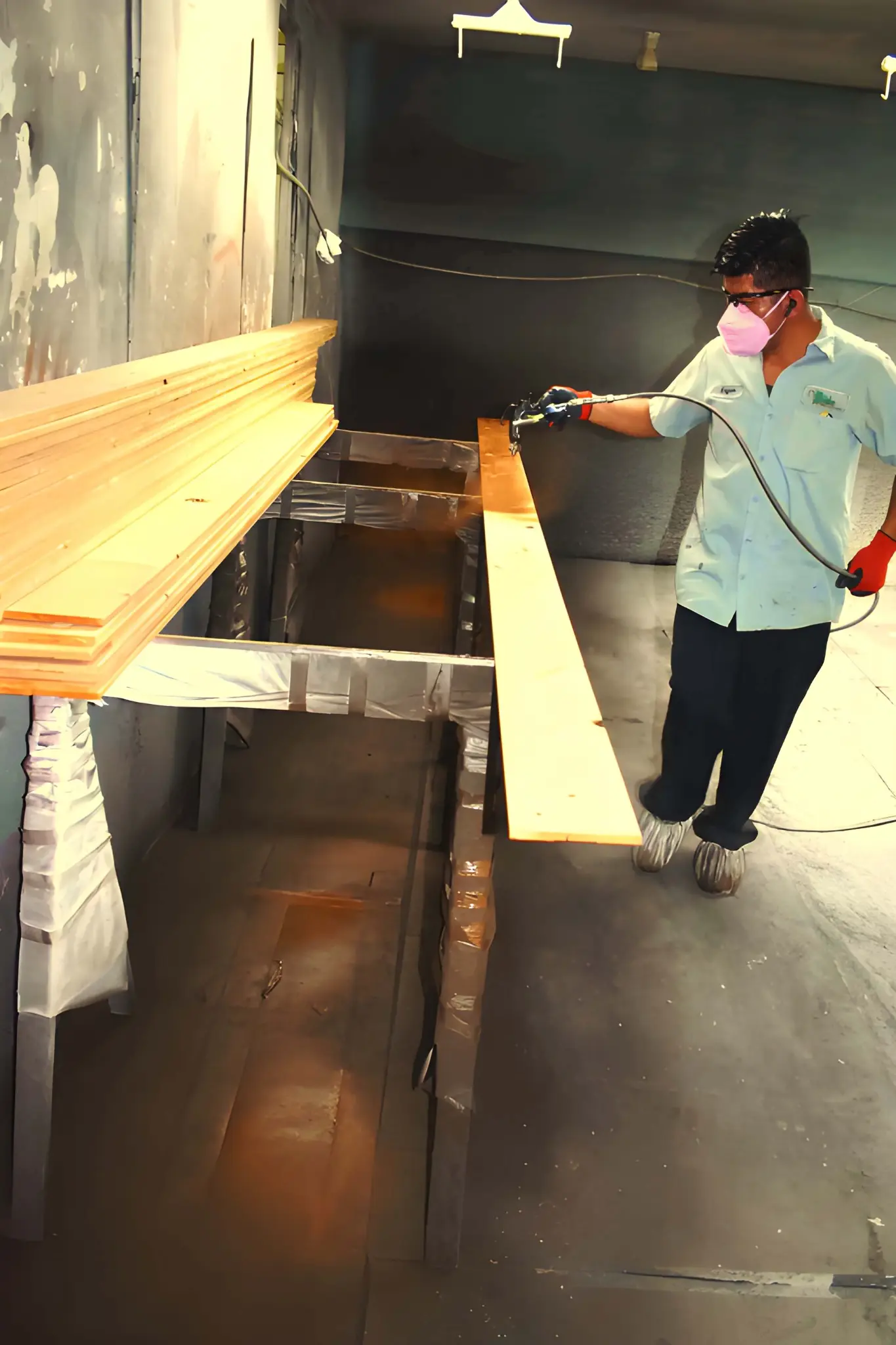
LEED v4 and v4.1 address interior finish materials through two primary credit pathways relevant to prefinished wood. The Indoor Environmental Quality (IEQ) category includes credits for low-emitting materials, which evaluate the VOC content of paints, coatings, adhesives, and sealants used inside the building. The Construction Indoor Air Quality Management Plan credit addresses practices that protect indoor air quality during and after construction. Factory prefinishing contributes to both pathways. When coatings are applied at a factory, zero VOCs from those coatings are released inside the building, not during application, not during curing, not at any point. This is not a reduction; it is a complete elimination of wood finish VOC exposure from the occupied space. For project teams pursuing LEED certification, factory prefinishing simplifies compliance documentation and removes an entire category of on-site emissions from the tracking burden. It does not earn LEED points on its own, but it directly supports the credits that do.
What LEED Compliant Prefinishing Means
Not all factory prefinishing automatically qualifies as low-emitting under LEED criteria. The finish system matters. UV-curable coatings are the strongest performers: they contain near-zero VOCs because the curing mechanism is photochemical, not evaporative. The liquid resin polymerizes under UV light without releasing volatile solvents into the air. Water-based coatings can also qualify, but their VOC content must fall below the thresholds established by the applicable standard, typically SCAQMD Rule 1113 or CARB Suggested Control Measure for wood coatings. Solvent-based and catalyzed lacquer systems used in some factory operations may exceed those thresholds and would not support LEED IEQ credits even though they are applied off-site. When evaluating a prefinishing partner for a LEED project, the question is not just whether they apply coatings in a factory. The question is which specific coating systems they use and whether those systems meet the VOC content limits required by the LEED credit being pursued.
The On-Site VOC Advantage
Every coating applied on-site during construction must be tracked for LEED documentation purposes. The project team must collect product data sheets, verify VOC content against applicable limits, and maintain records showing compliance for each product used. On a large commercial project, the number of on-site coatings can be substantial: wall paint, door and trim finishes, cabinet finishes, concrete sealers, wood floor finishes, and specialty coatings for various substrates. Each one is a documentation line item. Factory prefinishing removes wood finishes from that on-site list entirely. The doors arrive finished. The trim arrives finished. The millwork arrives finished. None of those products contribute any VOC exposure inside the building because no coating was applied or cured in the building. This is a meaningful administrative simplification for the LEED documentation team. It also provides a buffer: if other on-site coatings are close to VOC limits, having zero contribution from wood finishes gives the project team more room to work with on the remaining products.
LEED Documentation Woodco Provides
For projects pursuing LEED certification, Woodco Prefinishing provides the documentation that project teams and LEED consultants need to support credit submissions. This includes product data sheets for each coating system used, specifying the manufacturer, product name, and intended application. VOC content documentation shows the grams-per-liter VOC content of each coating, tested per the applicable standard method. Coating system specifications detail the full stack, primer, color coat, and topcoat, along with application method and cure process. Compliance statements confirm that the coatings used on the specific order meet the referenced VOC thresholds. These documents are provided per order and can be customized to reference the specific LEED credit pathway the project is pursuing. The documentation is prepared during production and ships with the finished product or is available electronically upon request. Project teams should request LEED documentation at the time of order placement to ensure it is prepared alongside the production schedule.
Practical Guidance for Specifiers
Architects and specifiers pursuing LEED credits through prefinished millwork should address it explicitly in the construction documents. The specification should state that wood doors, trim, and millwork are to be factory prefinished, not simply finished. The distinction matters because a spec that says painted or stained without specifying factory application leaves the door open for field finishing, which does not provide the same LEED benefits. Reference AWI standards for finish quality grades where applicable. Include a requirement for VOC content documentation from the prefinisher and specify the applicable threshold, such as SCAQMD Rule 1113 or the relevant LEED-referenced standard. Require submittal of coating system data sheets during the shop drawing phase, not after delivery. Specify that touch-up products provided for field repairs must also meet the project's VOC requirements, as touch-up coatings applied on-site are subject to the same LEED tracking as any other on-site coating. Early coordination with the prefinishing partner is important, lead times for LEED-documented orders may be slightly longer than standard production.
Published by Woodco Prefinishing