
The Hidden Cost of Field Finishing
Field finishing costs extend well beyond the painter's hourly rate. Before any coating touches wood, a paint crew must mobilize to the site by transporting equipment, setting up spray rigs or staging materials, and coordinating access with other trades. Masking is a significant labor item: every floor, window, piece of hardware, and adjacent surface must be protected before spraying or rolling begins. Multiple coats mean multiple visits, and each coat requires dry time during which no other work can happen in that space. After painting, the crew must clean up overspray, remove masking, and address any defects found during inspection. Then there is the punch list. Field-applied finishes routinely generate quality callbacks: missed spots, drips, uneven color, and damage from other trades working too close to wet surfaces. Each callback requires the painter to remobilize, which costs money every time. These costs do not appear on the painter's original bid. They appear as change orders, schedule delays, and general conditions overhead that inflate the total project cost.
What Factory Prefinishing Eliminates
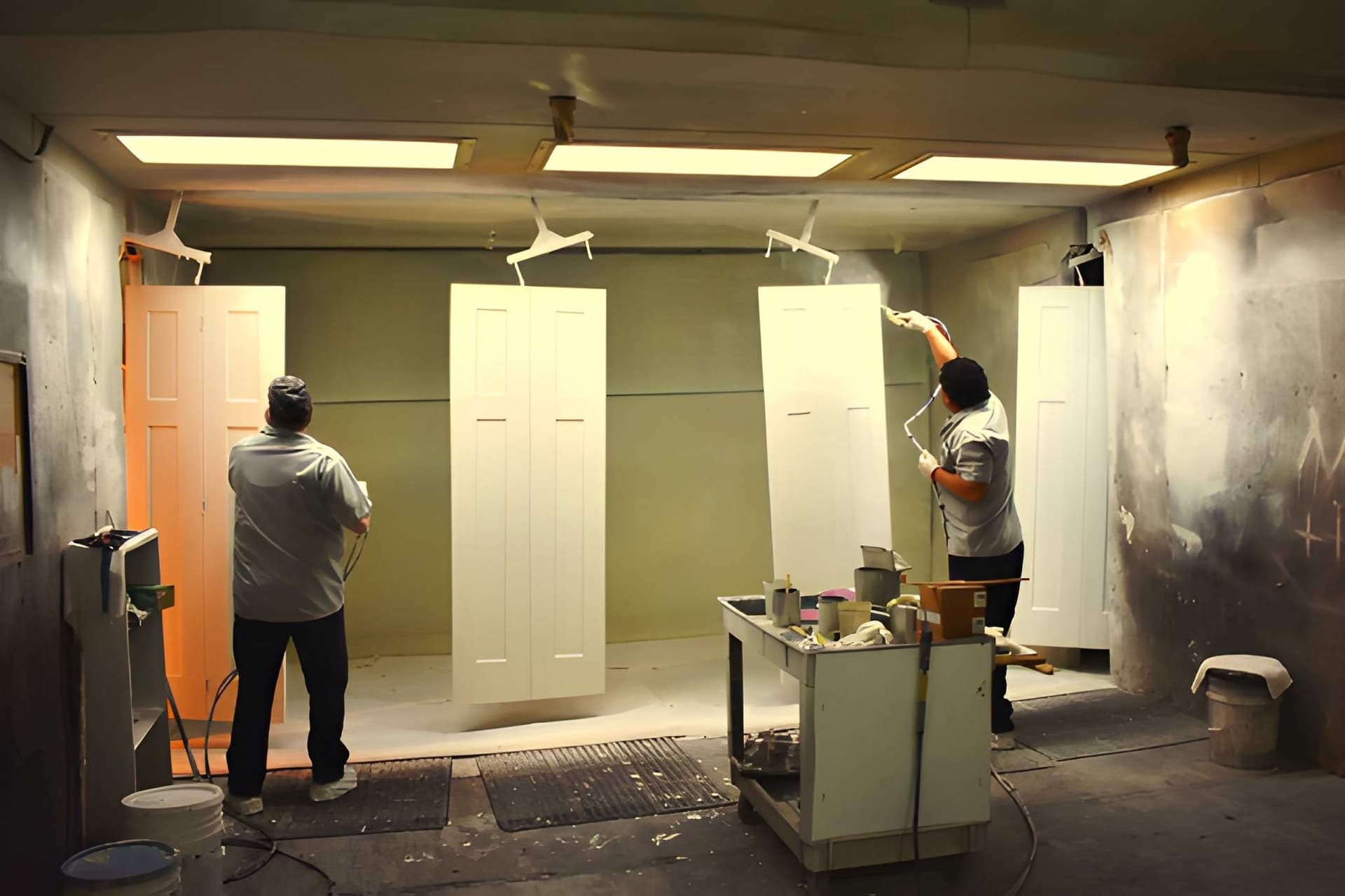
Factory prefinishing removes entire categories of on-site labor from the project budget. There is no painter mobilization because there is no painter. No masking labor because finishes are fully cured before the product reaches the site. No drying delays because UV coatings cure in seconds at the factory and water-based coatings cure in ovens before packaging. No overspray cleanup because coating happens in a controlled booth, not in a finished building. The site superintendent does not need to coordinate painter access with electricians, plumbers, and flooring installers. The schedule does not include dead days waiting for coats to dry. Materials arrive finished and install immediately, with the millwork crew handling everything in one pass. Damage from other trades contacting wet finishes does not happen because the finish has been fully cured for days or weeks before it reaches the building. The reduction in punch-list items is substantial. Factory-finished products have already passed quality inspection before they ship.
A Practical Cost Scenario
Consider a 100-unit apartment complex with standard interior door and trim packages. Each unit requires approximately 7 doors and 300 linear feet of trim (700 doors and 30,000 linear feet of millwork total). Field finishing this scope typically requires a paint crew of 4 to 6 people working for 8 to 10 weeks, accounting for primer, color coat, and topcoat on all components plus masking, cleanup, and punch list. At prevailing Midwest labor rates, that painting scope runs between $85,000 and $120,000 when you include mobilization, materials, masking supplies, and supervision. Factory prefinishing adds a per-unit premium to the door and millwork prices, typically $8 to $15 per door and $0.40 to $0.80 per linear foot of trim. On this project, that totals $17,600 to $34,500. Even at the high end of the prefinishing premium and the low end of the field-finishing estimate, the factory option saves over $50,000 in direct labor cost. That does not include the schedule savings, which on a 100-unit project can be worth significantly more than the direct labor delta.
Schedule Compression
In commercial and multi-family construction, schedule is money. Every day a building is under construction instead of occupied is a day of carrying costs: loan interest, insurance, taxes, and lost revenue. Field finishing sits on the critical path of interior fit-out. Doors and trim cannot be painted until drywall is finished, primed, and sanded. Once painting starts, each coat needs 24 to 48 hours of dry time before recoating, and the space must be kept clean and climate-controlled during that window. Other trades are either locked out or working around wet finishes, creating both schedule delays and damage risk. Factory prefinished materials bypass this entire sequence. They arrive finished and install directly after drywall is complete. The millwork installer handles doors, trim, and hardware in a single mobilization. There is no waiting for paint, no sequencing around dry times, and no trade conflicts with painting crews. On a typical multi-family project, this can compress the interior finish schedule by two to four weeks, a meaningful acceleration that translates directly into earlier occupancy and revenue.
The Rework Factor
Rework is the cost that nobody wants to talk about during bidding but everybody pays during construction. Field-applied finishes are inherently vulnerable to defects. Brush marks on door faces. Roller stipple on flat panels. Color variation between the first unit painted and the fiftieth. Overspray on adjacent surfaces that were inadequately masked. Damage from trades installing hardware, hanging light fixtures, or moving materials through spaces with fresh paint. Each defect generates a punch-list item, and each punch-list item requires the painter to return to the site, set up, correct the problem, clean up, and leave. On large projects, finish-related punch items can number in the hundreds. Factory prefinished products arrive with their finish fully cured and quality-inspected. The primary risk is transit and handling damage, which is addressed through proper packaging and careful installation, both of which are standard practice with prefinished materials. The result is a dramatically shorter punch list, fewer callbacks, and a smoother closeout process.
Published by Woodco Prefinishing