

Mistake 1: Uncontrolled Humidity Causing Adhesion Failure
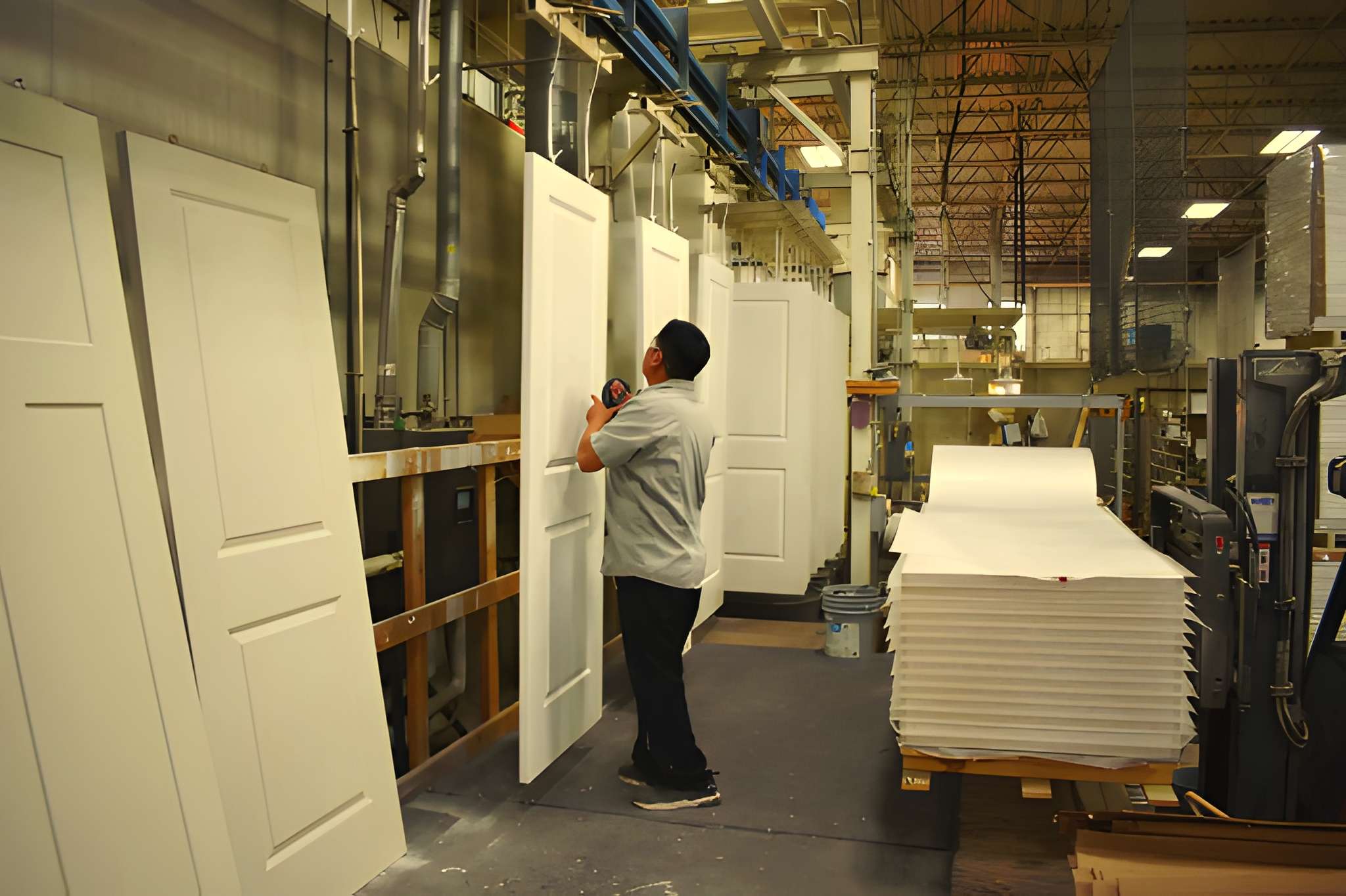
Wood is hygroscopic: it absorbs and releases moisture in response to the surrounding environment. On a construction site, humidity levels fluctuate dramatically. During cold months, unheated buildings can have very low humidity, causing wood to dry out and shrink. During warm months or after wet trades like concrete and drywall finishing, humidity spikes can push wood moisture content well above the acceptable range for coating adhesion. When paint or stain is applied to wood with moisture content above 12 percent, the coating cannot bond properly to the substrate). The result is adhesion failure, bubbling, peeling, and flaking that appears days or weeks after application. The painter has left the site, the damage is discovered during punch list, and the correction requires sanding back to bare wood and recoating under conditions that may not be any better than the first attempt. Factory prefinishing eliminates this problem entirely. The factory environment maintains consistent humidity levels year-round. Wood moisture content is measured before coating. Products that are outside the acceptable range are conditioned before they enter the finish line.
Mistake 2: Inconsistent Application Thickness
Coating thickness directly affects appearance and durability. Too thin, and the coating does not provide adequate coverage, wood grain telegraphs through paint, stain appears blotchy, and the surface lacks the protection it needs. Too thick, and the coating sags, drips, or takes excessively long to cure, creating a surface that looks uneven and feels rough. Field application with brushes and rollers inherently produces variable thickness. A brush applies more coating on the first stroke after loading than on the third. A roller applies more on the initial pass than on the back-roll. Even spray application on-site varies with operator technique, distance from the surface, travel speed, and material viscosity. These variations are visible: one door panel looks different from the next because the film thickness differs. Factory spray lines eliminate this variation. Automated spray systems are calibrated to deliver a specific film thickness measured in mils. Conveyor speed, spray pressure, tip size, and gun-to-surface distance are set during line calibration and maintained throughout the production run. The result is piece-to-piece consistency that hand application cannot match.
Mistake 3: Color Variation Between Batches and Applicators
On large projects requiring multiple cases of paint or multiple cans of stain, color variation between manufacturing batches is a real risk. Paint manufacturers hold tight tolerances, but tolerances exist, and when two slightly different batches are applied side by side on adjacent trim pieces, the difference is visible. This is compounded when multiple painters work on the same project. Each painter has a different technique, a different application speed, and a different tendency for film thickness. Painter A applies stain with a heavy wipe, producing a darker tone. Painter B uses a lighter wipe, producing a lighter tone. Both are using the same product from the same can, but the results differ because the human variable is uncontrolled. On multi-unit projects, this creates a patchwork effect: some units look darker, some lighter, with no systematic pattern. Factory prefinishing eliminates both sources of variation. Coating batches are mixed in volumes large enough to cover the entire order. The automated spray system applies the same thickness to every piece regardless of which operator is monitoring the line. The result is a single, consistent color across every piece in the order.
Mistake 4: Finish Damage Before It Cures
Field-applied coatings have a vulnerability window between application and full cure. Latex paint is touch-dry in a few hours but does not reach full hardness for 14 to 30 days. Stains and polyurethanes have similar extended cure periods. During this window, the finish is soft and easily damaged. On a busy construction site, that vulnerability window is a problem. Electricians install outlets adjacent to freshly painted trim and scuff the surface with their tools. Flooring crews drag materials past freshly finished doors. HVAC installers lean ladders against painted walls. Cleaners wipe freshly stained millwork with wet rags before the finish has cured. Each incident creates a defect that requires the painter to return and repair. Factory-applied UV coatings reach full hardness in seconds. Water-based factory coatings are fully cured in ovens before the product is packaged. When prefinished materials arrive at the job site, the finish is already at full hardness. Normal handling and installation will not damage a properly cured factory finish. The vulnerability window does not exist.
Mistake 5: Coordination Failures Between Trades
Field finishing requires the painting trade to work in the same spaces as other trades, creating scheduling conflicts and physical interference. The painter needs clean, dust-free conditions, but drywall sanders are working one room over. The painter needs unobstructed access to all surfaces, but the electrician has boxes and wire pulls in the way. The painter needs dry time, but the GC needs the space turned over to the flooring crew tomorrow. These conflicts are predictable, and they happen on every project that includes field finishing. The results are compressed painting schedules that sacrifice quality, damage from trades working around wet finishes, and scope disputes about who is responsible for corrections. Factory prefinishing removes the painting trade from the job site entirely. There is no painter to schedule around other trades. There is no wet finish to protect. There are no drying delays blocking subsequent work. The millwork installer receives fully finished materials and installs them in a single pass. The only on-site coordination required is delivery timing and material handling, both of which are straightforward logistics tasks that do not conflict with other trades.
Published by Woodco Prefinishing