How UV-Curable Coatings Work
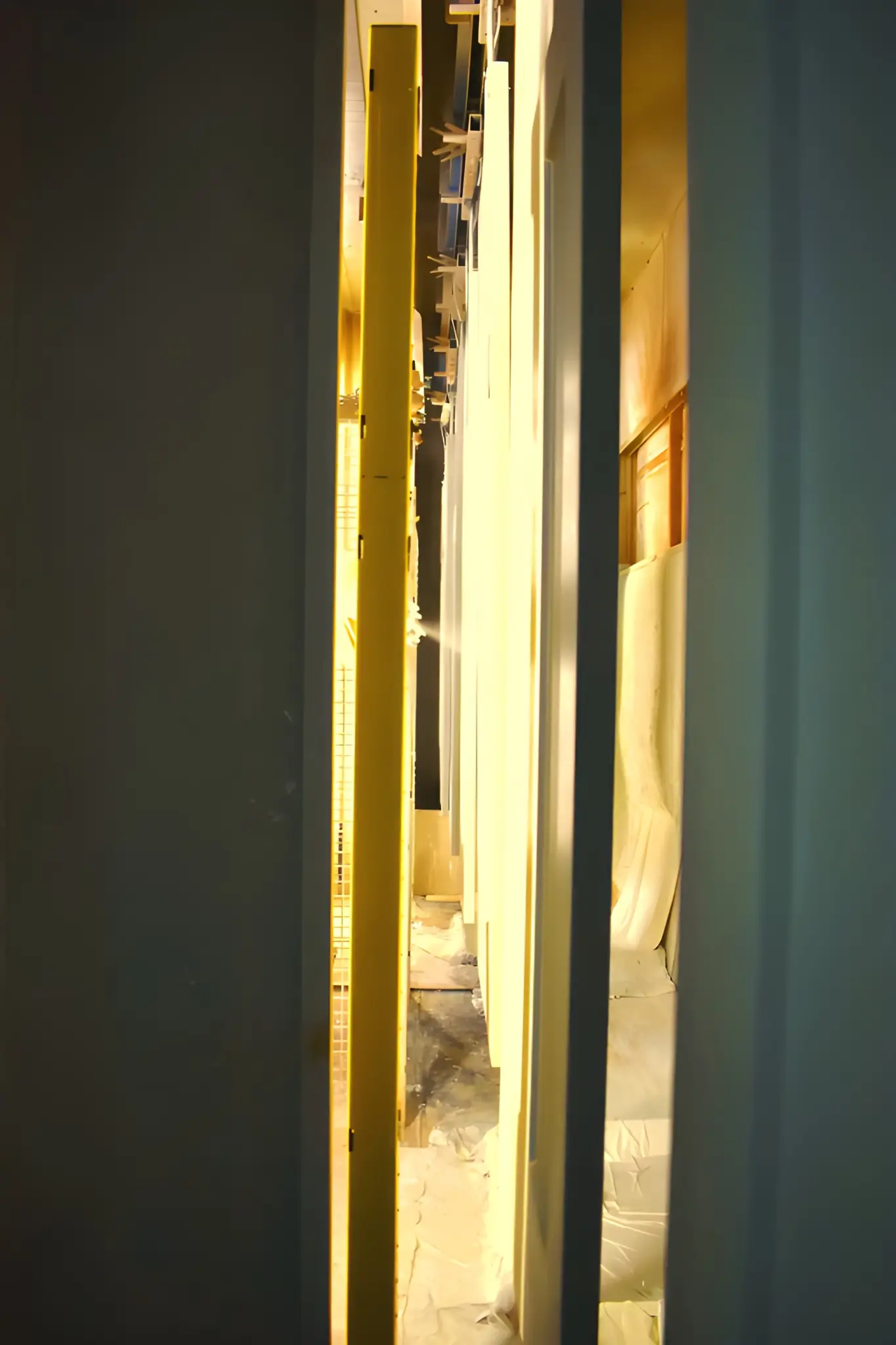
UV-curable coatings are liquid polymer formulations that cure (or harden) through a photochemical reaction triggered by ultraviolet light. The liquid coating is applied to the wood surface via automated spray or roller coater, then passed under high-intensity UV lamps mounted on the production conveyor. The UV energy initiates a rapid polymerization reaction that converts the liquid film to a solid, fully cross-linked coating in a matter of seconds. No heat is required. No solvent evaporates. The coating goes from liquid to fully hardened in the time it takes the piece to travel a few feet down the conveyor line. This speed is a fundamental advantage in high-volume production, lines running UV coatings can finish thousands of pieces per shift with minimal floor space dedicated to curing. The resulting film is dense, hard, and chemically resistant because the cross-linking is thorough and immediate. UV coatings contain near-zero volatile organic compounds because there is no evaporative carrier, the entire liquid volume converts to solid film.
How Water-Based Coatings Work
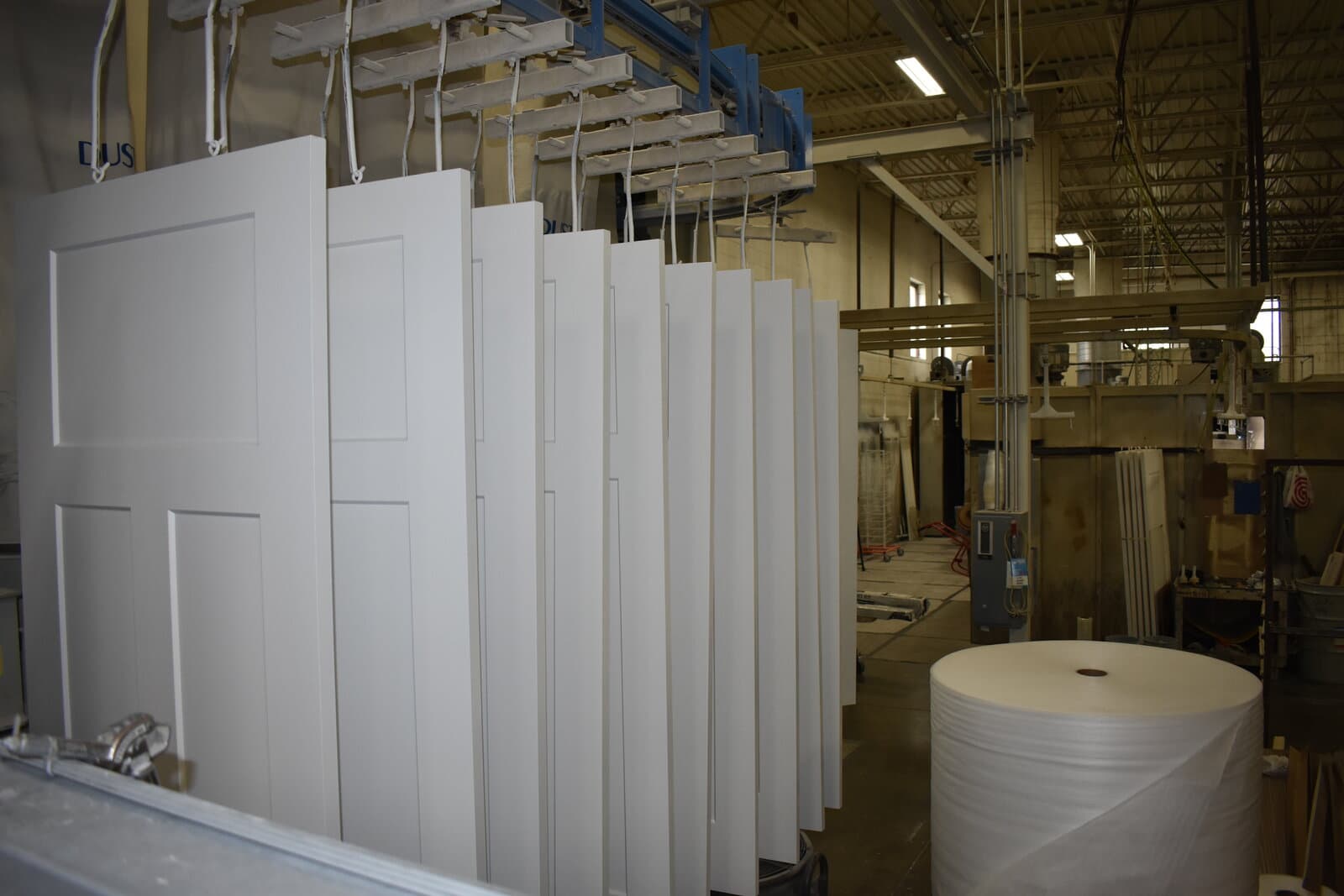
Water-based coatings use water as the primary carrier for the resin and pigment components. When applied to a surface, the water evaporates, and the resin particles coalesce to form a continuous film. In a factory setting, this evaporation is accelerated using heated ovens or infrared lamps, the coated piece passes through a controlled heat zone that drives off moisture and speeds film formation. Cure times are significantly faster than air-dry field application but still longer than UV, typically minutes rather than seconds. Water-based systems offer excellent clarity on natural wood tones and are available in a wide range of sheens from dead flat to high gloss. They are formulated with low VOC content, typically below the thresholds required by LEED and regional air quality regulations, though not zero-VOC like UV systems. Water-based coatings are more forgiving on complex profiles and shaped millwork because they flow and level well into corners, grooves, and relief details where UV coatings can pool or shadow from the UV lamps.
Side-by-Side Comparison
Cure time is the most dramatic difference. UV coatings cure in 2 to 5 seconds under the lamp. Water-based coatings require 3 to 10 minutes in a heated oven depending on film thickness and oven temperature. This difference directly affects production throughput and floor space requirements. In terms of hardness and durability, UV coatings produce a harder film, typically scoring higher on pencil hardness and Taber abrasion tests, making them the preferred choice for high-traffic surfaces like doors and stair treads. Water-based coatings are softer but still significantly more durable than field-applied finishes. For clarity and appearance, water-based coatings have a slight edge on natural wood, offering a warmer tone with less plastic appearance than some UV formulations. UV coatings have improved substantially in clarity over the past decade but can still exhibit a slightly cooler cast on light woods. VOC content favors UV: near-zero versus low-but-not-zero for water-based. Both support LEED compliance, but UV makes documentation simpler. Cost per unit is typically comparable, though UV lines have higher capital equipment costs. Substrate compatibility differs as well, UV works best on flat and gently curved surfaces, while water-based handles complex profiles more reliably.
Which to Specify When
The right choice depends on the product, the performance requirement, and the project context. UV-curable coatings are the best fit for high-volume linear goods, siding, paneling, trim, and flooring, where maximum hardness, fastest throughput, and lowest VOC content are priorities. At Woodco, UV is run on our lineal line; doors are finished with water-based systems on dedicated door lines. Projects pursuing LEED certification with the simplest possible documentation path favor UV because the near-zero VOC content is unambiguous. Water-based coatings are the better choice for complex profiles, crown molding with deep relief, raised-panel doors with intricate routing, and shaped stair parts with curves and grooves where UV lamp shadows would create uneven cure. Projects where the specification calls for a natural wood appearance with warm tone may prefer water-based for aesthetic reasons. Projects where field touch-up capability is important favor water-based, because water-based touch-up products are readily available and compatible, while UV coatings cannot be cured in the field without specialized equipment.
Questions to Ask Your Prefinisher
When evaluating a prefinishing partner for your project, ask specific technical questions about their coating systems. What finish systems do you run for this specific substrate and product type? A good prefinisher will recommend the right system for your product rather than applying whatever they have on the line. What is your cure process, and how do you verify full cure? UV operations should be monitoring lamp intensity and replacing lamps on a maintenance schedule. Water-based operations should be monitoring oven temperature and belt speed. Can you provide VOC content documentation for the specific coatings used on my order? This is essential for LEED projects and increasingly requested by owners even on non-LEED work. What is the pencil hardness or Taber abrasion rating of the cured film? This matters for doors, treads, and any surface that will see daily contact. Do you provide a compatible touch-up product, and is it available for field use? Inevitably, some pieces will need minor repair after installation, and having a matched touch-up product prevents visible patchwork.
Published by Woodco Prefinishing